EU Funding
Total Budget
Timeline
Countries
Project summary
Urban Animal Network supports urban stakeholders with knowledge, tools and validated solutions to enable the safe and free movement of urban animals. This movement takes place across four ecological layers: air, tree canopy, shrubs and water.
By improving connectivity between public and private green spaces, removing barriers and expanding habitats, cities can create healthier and more resilient environments for wildlife. Urban Animal Network is a collaboration between eight cities and five knowledge institutes from seven North-West European countries, sharing knowledge and developing solutions together.
Our objectives and expected impact
The project aims to:
• Co-develop a joint Urban Animal Network strategy and seven action plans
• Pilot and implement approaches that enable safe and free movement across four ecological layers: water, shrubs, tree canopy and air
• Build expertise and increase capacity within seven urban authorities, local communities and five knowledge institutes
improvement in habitats
hectares of green
space connected
hedgehogs, bats,
squirrels and amphibians
Expected results:
Urban Animal Network delivers four key results to improve urban biodiversity across North-West Europe.
1.
A joint Urban Animal Network strategy will be adopted by seven urban authorities in five countries (France, Belgium, the Netherlands, Ireland and Luxembourg). Place-based action plans support local implementation, and the
strategy will be made available to other cities.
2.
Seven replicable solutions will be implemented across four ecological layers (water, shrubs, tree canopy, and air). These solutions support amphibians, hedgehogs, squirrels and bats through measures including wildlife-friendly lighting, crossings, bridges, guiding structures, decision-support tools and incentives for private owners.
3.
Tailored training schemes will strengthen skills among city staff, residents, citizen scientists and students.
4.
Partner organisations and knowledge institutes will increase their capacity through transnational cooperation, enhanced expertise, revised curricula and improved approaches to design, engagement, maintenance and monitoring.
Why this project matters
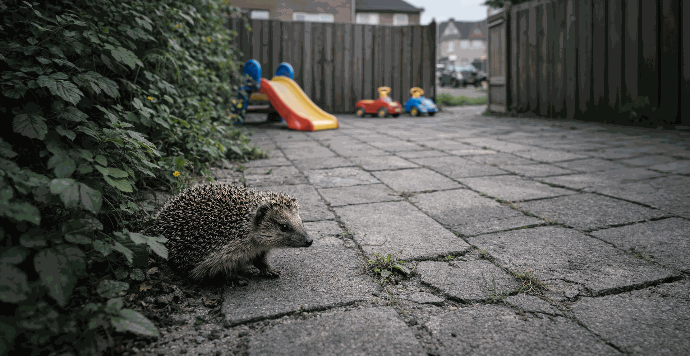
Biodiversity is declining across North-West Europe, reducing ecological resilience. Mammals and amphibians are particularly affected, with species such as the common hedgehog now considered near threatened. As urban areas continue to expand, cities play a crucial role in reversing this trend. However, urban environments also create barriers for wildlife. Roads, artificial lighting and noise fragment habitats and limit the movement of animals.
Expanding and connecting urban habitats is therefore essential. At the same time, urban authorities face challenges such as fragmented land ownership, limited data on animal movement and dispersed expertise. Collaboration with private landowners, the use of citizen science and better knowledge sharing are key to enabling safe and free movement of animals in urban areas.
Partners