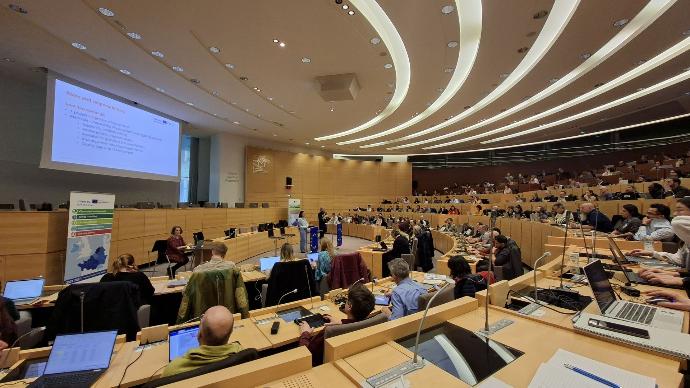
On 11 January 2025, the Urban Animal Network project officially kicked off in Lille, France. Partners from seven North-West European countries (BE, CH, DE, FR, IE, LU, NL) came together for the start of this Interreg NWE project.
From 2025 to 2029, Urban Animal Network empowers urban communities and stakeholders with biodiversity knowledge, tools and validated solutions that support the safe and free movement of urban animals.
Four ecological layers
This movement takes place across four ecological layers: air, tree canopy, shrubs
and water. By improving connectivity between public and private green spaces,
removing barriers and expanding habitat, cities can create healthier and more
resilient environments for wildlife.
Project goals
- +10% hedgehogs, bats, squirrels and amphibians
- +20% habitat improvement
- 100 hectares of green space connected
Partners met in Lille to mark the start of the collaboration and to begin working
towards these shared ambitions, driven by strong energy, openness and a shared
commitment to biodiversity and nature.
On 11 January 2025, the Urban Animal Network project officially kicked off in Lille.
Partners from seven North-West European countries (Belgium, Switzerland,
Germany, France, Ireland, Luxembourg and the Netherlands) came together to
launch this Interreg NWE collaboration.
This moment marks the start of four joint work focused on enabling safe and free
movement of urban animals
Working
From 2025 to 2029, Urban Animal Network supports urban communities and
stakeholders with knowledge, tools and validated solutions that enable the safe
movement of animals through the city.
This movement takes place across four ecological layers: air, tree canopies, shrubs
and water. By improving connections between green spaces, removing barriers and expanding habitats, cities can create healthier and more resilient environments for
wildlife.
Ambitious Goals
The project sets clear and measurable ambitions:
- A 10% increase in key species such as hedgehogs, bats, squirrels and amphibians
- A 20% improvement in habitat quality
- 100 hectares of green space better connected
With a strong partnership across Europe, Urban Animal Network aims to deliver practical solutions that can be applied in cities throughout the region.