
Habitats - Air
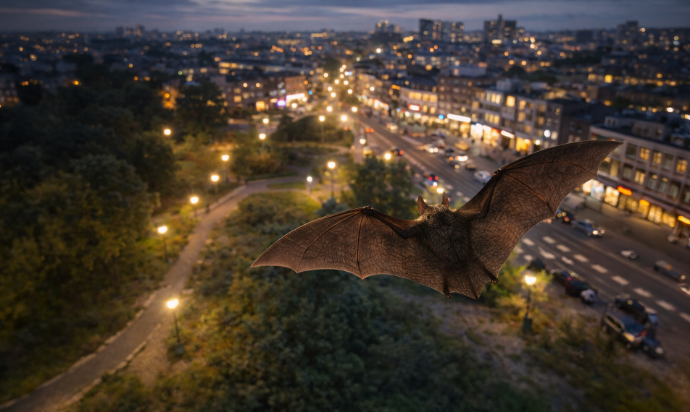
The air layer
The air layer is an invisible highway above our cities. While we sleep, bats take to the sky like a silent crew of nighttime pest control. They use this dark space to travel between their roosting sites in buildings and treesand the areas where they hunt for food.
Using echolocation, bats navigate through urban landscapes in the dark. A single bat can eat thousands of insects in one night, helping to control mosquito populations down and maintain a healthy environment.
However, life in the air layer in cities faces challenges.
Challenges in the air layer
Light pollution
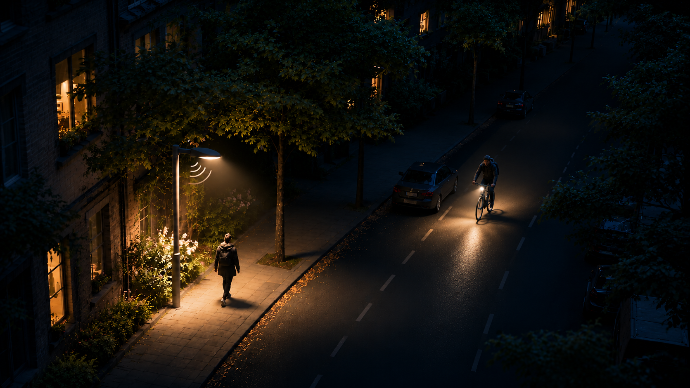
Artificial lighting along roads, pathways and waterfronts creates illuminated sections within hunting routes that can disrupt flight patterns, particularly for light-sensitive bat species. Upward facing light also attract nocturnal insects, drawing them away from darker areas usually hunt. As a result, bats may struggle to find enough food in their usual hunting grounds.
Fragmentation of flight paths
Tall buildings and large, brightly lit) open spaces interrupt the natural travel routes of bats. Trees play an important role in helping bats navigate through cities. They provide landmarks that bats can detect through echolocation and offer sheltered
routes to fly along. When trees are missing, gaps appear in these routes, making it more difficult for bats to move safely.
Dissappearing shelters
Bats often find shelter in cavity walls, entering through small openings in buildings.
Modern renovated buildings often close small gaps in roofs and walls, or use insulation in the cavity walls. This can cause bats to loose there roosting sites, or
even become trapped inside the walls.
Benefits for other urban wildlife
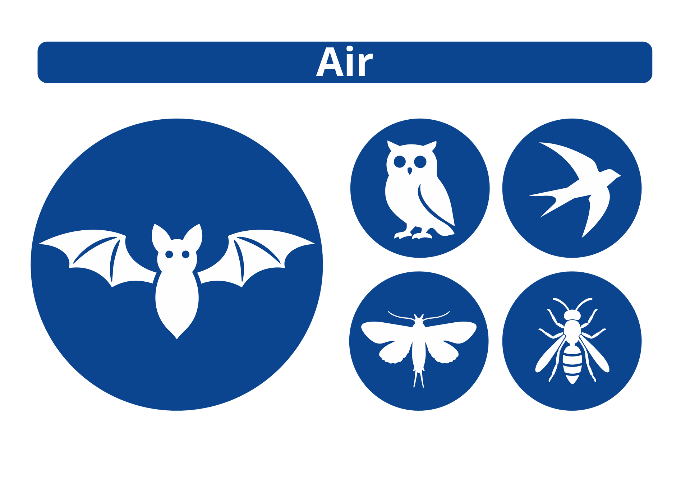
Measures that support bats can also improve other species. Dark corridors and suitable vegetation create better conditions for nocturnal insects, including moths, which are an important food resource for many animals. A greater availability of insects can also benefit insect-eating species, including birds such as the tawny owl.
Bat boxes may also provide shelter for other species that use cavities, such as wasps and common swifts.
Solutions
By creating dark areas and corridors, planting night blooming vegetation that attracts nocturnal insects and designing bat-friendly buildings, European cities, can help keep the air layer safe and connected for bats.
A strong aspect of the URBAN project is that its solutions for wildlife are not only implemented but also thoroughly researched and tested. Read more about this on the Pilot Page.