
Habitats
Have you ever wondered how a squirrel crosses a busy road when there are no connecting trees? How a hedgehog finds food when it is trapped in a fenced-off garden? How bats find insects when artificial light disrupts their flight routes? Or how frogs reach the water when
they need to breed?
For these animals, the city is not just a collection of buildings, roads and green spaces. It is a network of places they depend on to survive. They need food and water, places to rest, breed and shelter, and safe routes to move from one habitat to another.
In urban areas, these places are often disconnected. A fence blocks a hedgehog’s route. A road separates an amphibian from its breeding pond. Bright lighting disturbs a bat’s flight path. A gap in the tree canopy makes it harder for a squirrel to move safely through the city.
The project Urban Animal Network looks at the city through different ecological layers.
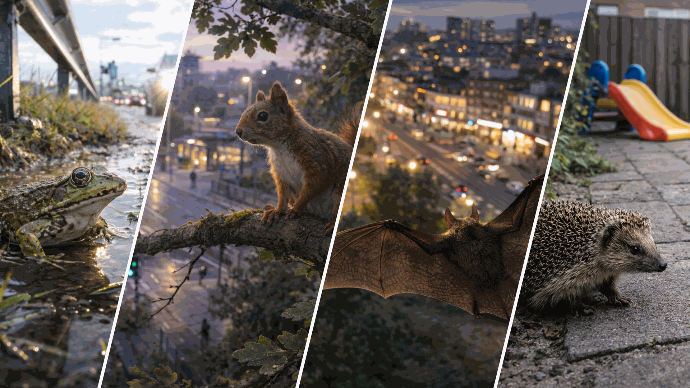
Explore the four ecological layers
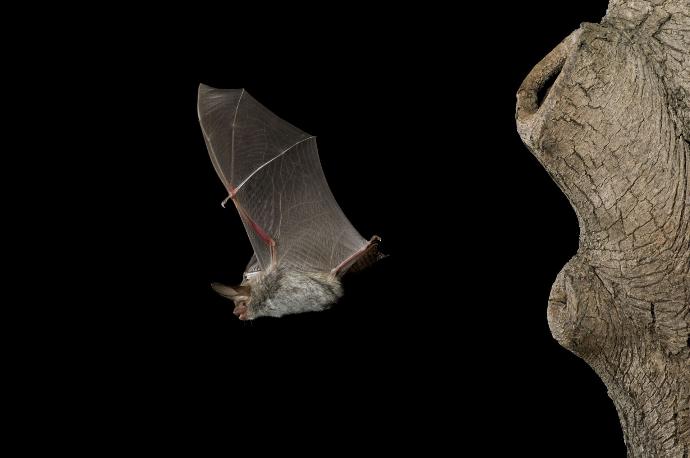
Air
The air layer is used among other animals by bats. They depend on safe flight routes, dark corridors and areas with enough insects. Artificial lighting, tall buildings and fragmented green spaces can disrupt how they move, feed and navigate through the city.
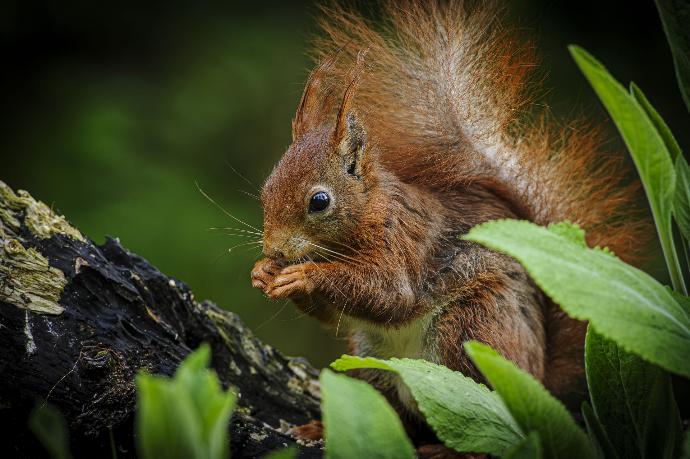
Tree canopy
Tree canopies connect parks, streets, and gardens above the ground. For squirrels this layer is important to move, feed and find shelter. Gaps between trees, busy roads and isolated green spaces can make these routes unsafe or impossible to use.
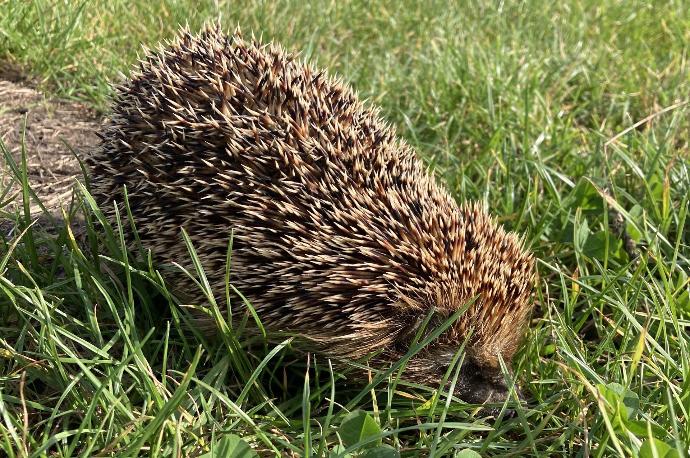
Shrubs
Shrubs, hedges and green edges create important shelter close to the ground. Hedgehogs and other small animals use this layer to search for food, hide, nest and move between habitats. Fences, paving and overly tidy green spaces can reduce the value of this layer.
Water
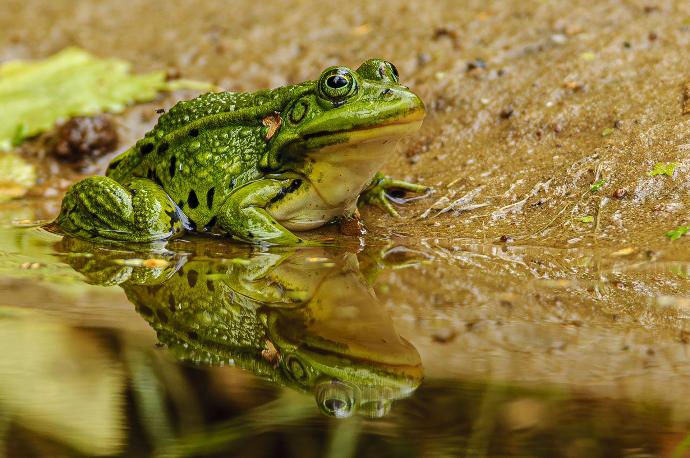
Ponds, streams and wet green spaces are essential for amphibians, as frogs and toads. Water provides breeding places, food and shelter. Poor water quality, steep banks, drought and unsafe routes between wet areas can make this layer difficult to use.
Pilot projects
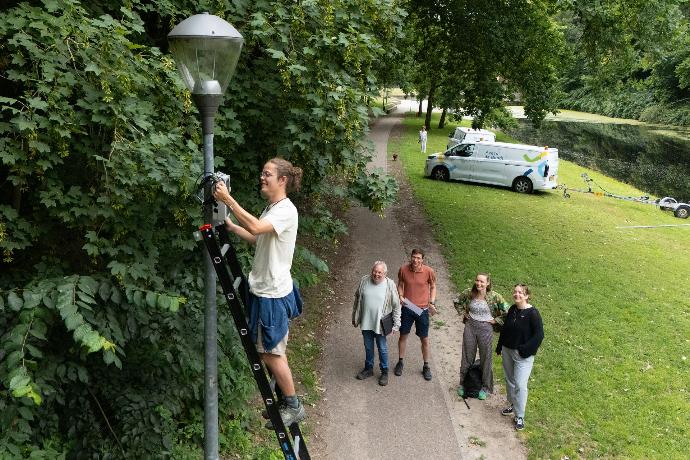
In our pilot projects we implement and monitor approaches that enhance safe and free movement of urban animals. The focus is on connecting private and public green spaces, improving ecological quality, reducing disturbances, and piloting a citizen science-based monitoring approach. In pilot projects we demonstrate practical solutions. It combines technical, social, and educational innovations, ensuring community buy-in and long-term sustainability of urban biodiversity actions. Lessons and tools developed will inform broader
policy and practice across North-West Europe.