
Habitats - Tree canopy
The tree canopy layer
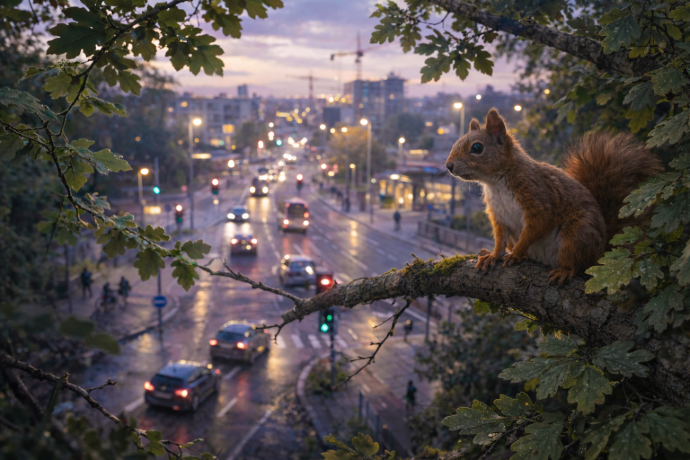
High above our heads, in the treetops of our parks and streets, lies the canopy layer. This green roof of the city is used by squirrels and many other animals. The canopy acts as a network of bridges.
Squirrels spend most of their lives off the ground, jumping from branch to branch to travel, find food, or escape ground predators. They build their nests high in trees and play a crucial role in urban ecosystems by spreading seeds, helping new trees and plants grow across the city.
However, life in the tree canopy layer in cities faces challenges.
Challenges in the tree canopy layer
Fragmented tree lines and ground predators
Artificial lighting along roads, pathways and waterfronts creates illuminated sections within hunting routes that can disrupt flight patterns, particularly for light-sensitive bat species. Upward facing light also attract nocturnal insects, drawing them away from darker areas usually hunt. As a result, bats may struggle to find enough food in their usual hunting grounds.
Benefits for other urban wildlife
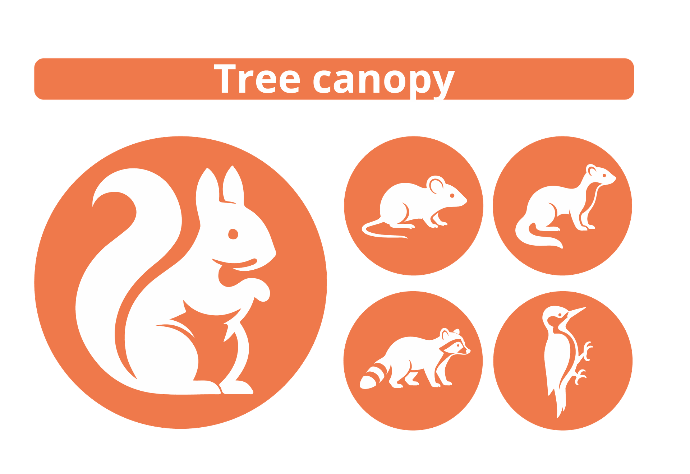
Measures that support squirrels are likely to benefit other animals that use trees for movement, shelter, and resting. These include species such as raccoons, stone martens and wood mice.
These animals do not live exclusively in trees, but they also rely on connected tree structures to move through urban landscapes. More trees can also benefit woodpeckers and other bird species.
Solutions
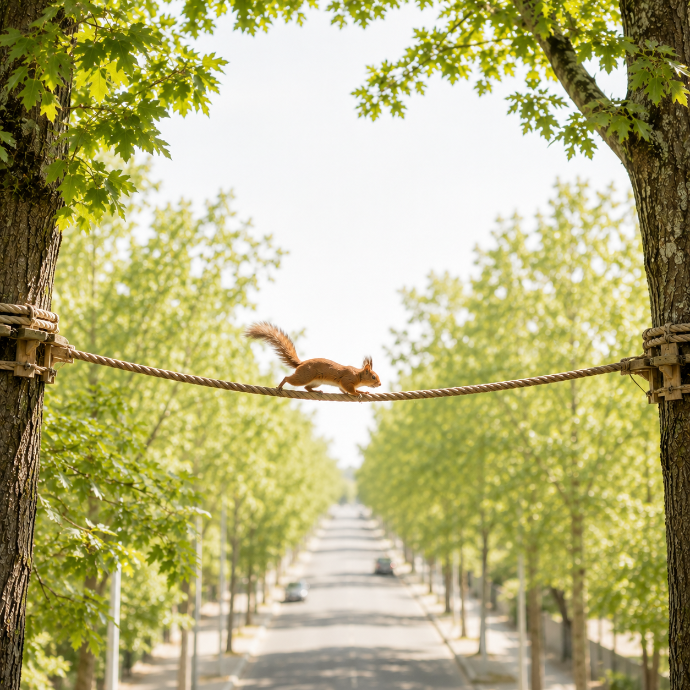
By planting continuous rows of native trees, creating wildlife (rope) bridges, and protecting urban forests across European cities, we keep the canopy connected and safe for wildlife.
A strong aspect of the URBAN project is that its solutions for wildlife are not only implemented but also thoroughly researched and tested. Read more about this on the Pilots page.