
Habitats - Water
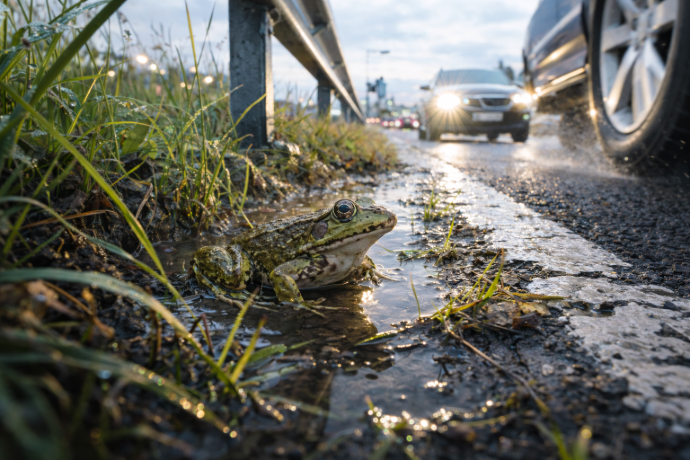
The water layer
Between our urban landscapes, in ponds, streams and ditches, lies the water layer. This aquatic environment is home to amphibians like frogs, toads, and newts.
Amphibians depend on water to reproduce, lay eggs, and develop from swimming larvae into land-dwelling adults. Because they absorb water and oxygen directly through their skin, these creatures can act as living warning systems: where amphibians thrive, the local urban environment is clean and healthy.
However, life in the water layer in cities has challenges.
Challenges in the water layer
Loss of breeding sites
Draining small pools, paving over ditches, and creating artificial steep-walled ponds leave amphibians with fewer safe places to lay their eggs.
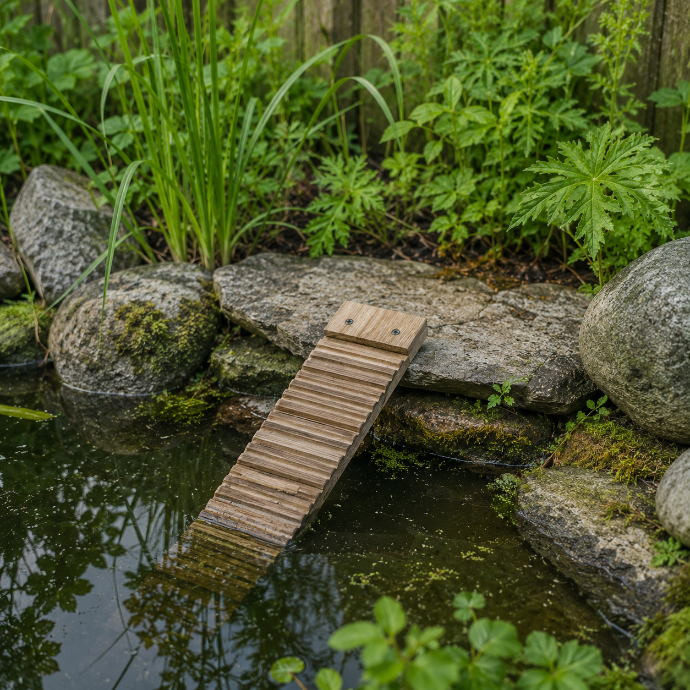
Steep banks can also act as ecological traps for small animals, making it difficult for them to safely leave the water when they fall in.
Blocked migration routes
High concrete kerbs and busy roads prevent frogs and toads from traveling safely between their land habitats and breeding waters. Amphibians prefer shorelines and woodland floors with plenty of native vegetation with damp leaf litter, mosses and fallen branches that provide cover from predators.
Benefits for other urban wildlife
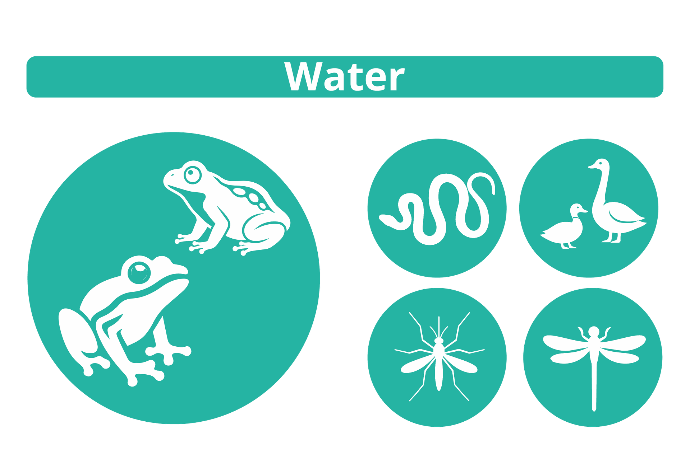
Measures that support amphibians can also benefit a variety of aquatic and semi- aquatic organisms. These habitats attract waterborne invertebrates, including mosquitoes and dragonflies, which form a part of the broader aquatic food web.
Improved wetland habitats may also benefit water-associated native and nonnative birds, such as wild ducks (mallards) and Canada geese, as well as semi-aquatic predators like the grass snake, which benefits from an increased availability of amphibian prey.
Solutions
By restoring natural pond edges, reducing chemical runoff, and creating safe water passages across European cities, we can protect the water layer and secure a healthy environment for urban wildlife.
A strong aspect of the URBAN project is that its solutions for wildlife are not only implemented but also thoroughly researched and tested. Read more about this on the Pilots page.